British style: “and” after hundreds
In British English a number is read with “and” before the tens and units: one hundred and fifty. This page has the British option switched on by default for that reason. One pound is 100 pence; the singular is “penny”.
| Figures | In words |
|---|---|
| £105 | One Hundred and Five Pounds Only |
| £1,150.20 | One Thousand One Hundred and Fifty Pounds and Twenty Pence Only |
| £2,001 | Two Thousand and One Pounds Only |
| £250,000 | Two Hundred and Fifty Thousand Pounds Only |
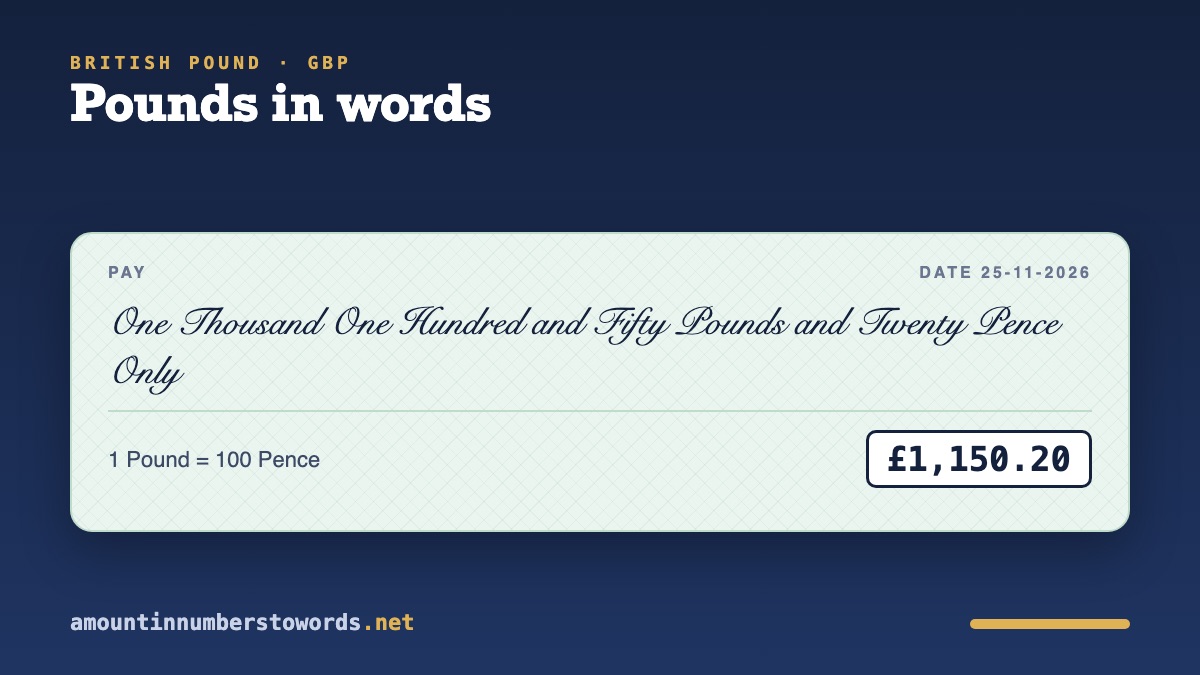
Writing a UK cheque
- Write the pounds in words from the start of the line, for example “One hundred and fifty pounds”.
- Add the pence in figures or words: “and 20p” or “and twenty pence”. Write “only” for a whole-pound amount.
- Write the amount in the box as
150.20, close to the £ sign. - Draw a line through unused space so nothing can be added.
Most UK banks treat a cheque as out of date six months after the date written on it.
Frequently asked questions
How do I write £1,250 on a cheque?
“One thousand two hundred and fifty pounds only” on the words line and “1,250.00” in the box.
Is it “pence” or “pennies”?
For amounts of money use “pence” (twenty pence, or 20p). “Pennies” refers to individual coins.
Why does British English add “and”?
It is simply the British convention for saying numbers aloud: “one hundred and five”. American English usually leaves it out.